
Sunscreens I Trust After Skin Cancer: For Your Face
This post contains affiliate links. I only recommend products I have personally used, researched, or would put on my own face. This is my experience as a patient, not medical advice — always follow your own dermatologist's guidance.
Six derm-grade sunscreens I trust after melanoma, for every skin type and budget. Jump to the FAQ
Pitch black. The size of a pencil eraser.
It was 2016. My parents were visiting me in Austin, and we were getting ready for dinner. My mom and I were in the bathroom, her standing behind me, when she suddenly called my dad over to look at something on my back.
My dad's an ENT surgeon. And my whole life, we really never made much out of being sick. Whether it was a minor ailment or an injury, Dad always had a solution, or we just took some Advil and got over it. Unless an arm was falling off.
All this to say: it takes a lot for my dad to react the way that he did.
He looked at the mole on my back, the one I probably hadn't seen in who knows how long. Upper portion of my back, toward my right shoulder. Not really a part of your body you see very often.
“Make an appointment tomorrow,” he said.
For my dad to react with that kind of urgency made me take it extremely seriously. So, I scheduled an appointment and, sure enough, the dermatologist was scheduling a biopsy.
Malignant melanoma, they said.
Now, I didn't know much about skin cancer. But I knew enough to know that malignant meant bad.
This is not some sob story. I'm telling you this so you understand how much sun protection actually means to me. So you understand that it means something to me to make sure you're protected too.
I successfully had my skin cancer removed, and there really wasn't much we said about it after that, other than that sun protection was about to become a major part of my life. A nonnegotiable.
I was very fortunate. My melanoma was what doctors call an intermediate thickness. If that mole had been just a hair deeper, it could have spread to my lymph nodes and required treatment.
Thankfully, that wasn't my story.
Honestly, the most eventful part of the whole thing is that when they removed it, the local anesthesia wore off, thanks to my redheaded mutant gene. I was awake for it. The same way my epidural didn’t work right before Rosie’s delivery.
Now here’s a fun fact. That same gene, the redhead one, the one that made the anesthesia quit on me twice, isn't just why I feel pain differently. It's also why I was more likely to be standing in that dermatologist's office in the first place. The MC1R gene doesn't just swap my protective dark pigment for the redhead kind that does basically nothing in the sun. Researchers at Harvard found it actually makes those pigment cells worse at fighting off UV damage, nudging them closer to cancer in the process. Carrying this variant meaningfully raises melanoma risk, on top of the fair skin that was already working against me.
So the same gene that caused the entire right side of my body to reject an epidural is the one that made my skin a liability in the sun.
Genetics are neat!
From then on, I made a commitment to sun protection. Which meant, given my penchant for research, hopping on down the rabbit hole to find the absolute best sunscreen to protect me in every situation.
These are my choices for my skin, and for anyone I care about, which now extends to you. My obsessively researched recommendations. From my holy grail derm favorite to the best option for sunscreen under makeup. These are the formulas I have rigorously vetted, personally used, and confidently stand behind based what the research actually says.
And by research I'm not talking TikTok, Allure, or Byrdie. I'm talking the American Academy of Dermatology. The JAAD. The Skin Cancer Foundation.
That's my holy trinity.
A quick note: I am a person who has had skin cancer sharing my personal journey and research, not a doctor. The information on this blog is for educational purposes only and should not replace professional medical advice, diagnosis, or treatment. Always consult your dermatologist before starting new skincare products, especially post-procedure.
The same research goes into everything here, including the one on playpen safety, where I checked every type against the only standards that matter: her safety, my sanity, so you don't have to.
✦ ✦ ✦
What I Actually Look For
Before I give you my picks, here's the short version of what I screen every sunscreen against. Four things, and once you know them, the whole aisle gets easier.
Broad-spectrum. This is the non-negotiable. It means the formula blocks both UVA (the aging rays that go deep) and UVB (the burning rays). UVB burns, UVA ages, and both contribute to skin cancer. If it doesn't say broad-spectrum on the label, it doesn't go on my face.
Mineral vs. chemical. Mineral filters (zinc oxide, titanium dioxide) sit on top of the skin and reflect and scatter UV rays. Chemical filters absorb them. A 2025 JAAD review on sunscreen mechanisms and efficacy breaks down how each type works and where they leave gaps. Mineral tends to be gentler on sensitive, reactive, or freshly healed skin, which is why it's often recommended after a skin cancer or a procedure. Chemical formulas usually feel lighter and layer better under makeup. Neither is “better” across the board. They're better for different skin and different days.
SPF 30 vs. 50. SPF 30 blocks about 97% of UVB rays. SPF 50, about 98%. The American Academy of Dermatology recommends a minimum of SPF 30. The bigger factor isn't the number, it's whether you apply enough and reapply every two hours, because most of us do neither.
Worn daily. The best sunscreen is the one you'll actually reach for every morning. A beautiful SPF 50 that lives in a drawer protects no one.
One honest note before we go further: I'm a patient who reads a lot, not a dermatologist. The Skin Cancer Foundation keeps a vetted list of recommended sunscreens, and your own derm knows your skin better than any blog post can. Use both.
✦ ✦ ✦
The Comparison, at a Glance
Six Face Sunscreens I Trust After Skin Cancer
Sorted by the day you're having, not the label.
EltaMD UV Clear SPF 46
My holy grail, and the one I used after skin cancer.
Shop EltaMD UV Clear →La Roche-Posay Melt-In Milk SPF 60
Lives in my purse. Nothing pills, nothing flakes.
Shop the Melt-In Milk →CeraVe Hydrating Sheer SPF 30
The Sheer, not the mineral. The one I keep restocking.
Shop CeraVe Hydrating Sheer →La Roche-Posay Tinted Mineral SPF 50
My secret weapon. I leave the house in just this.
Shop the Tinted Mineral →Supergoop Glowscreen SPF 40
It puts the fun in functional. Budget dupe: e.l.f. Whoa Glow SPF 30.
Shop Supergoop Glowscreen →EltaMD UV Pure SPF 47
When my skin needs zinc and nothing else, this is the one I trust.
Shop EltaMD UV Pure →$ = drugstore · $$ = mid · $$$ = splurge. Prices shift, so I keep it to dollar signs. SPF and formula are pulled straight from each label. I'm a patient who reads a lot, not a dermatologist, so pair this with the Skin Cancer Foundation's vetted list and your own derm.
Don't want to figure it out yourself? Take the quiz below and I'll help you find your match .
✦ ✦ ✦
The Sunscreens I Actually Use
1. My Derm Favorite: EltaMD UV Clear SPF 46
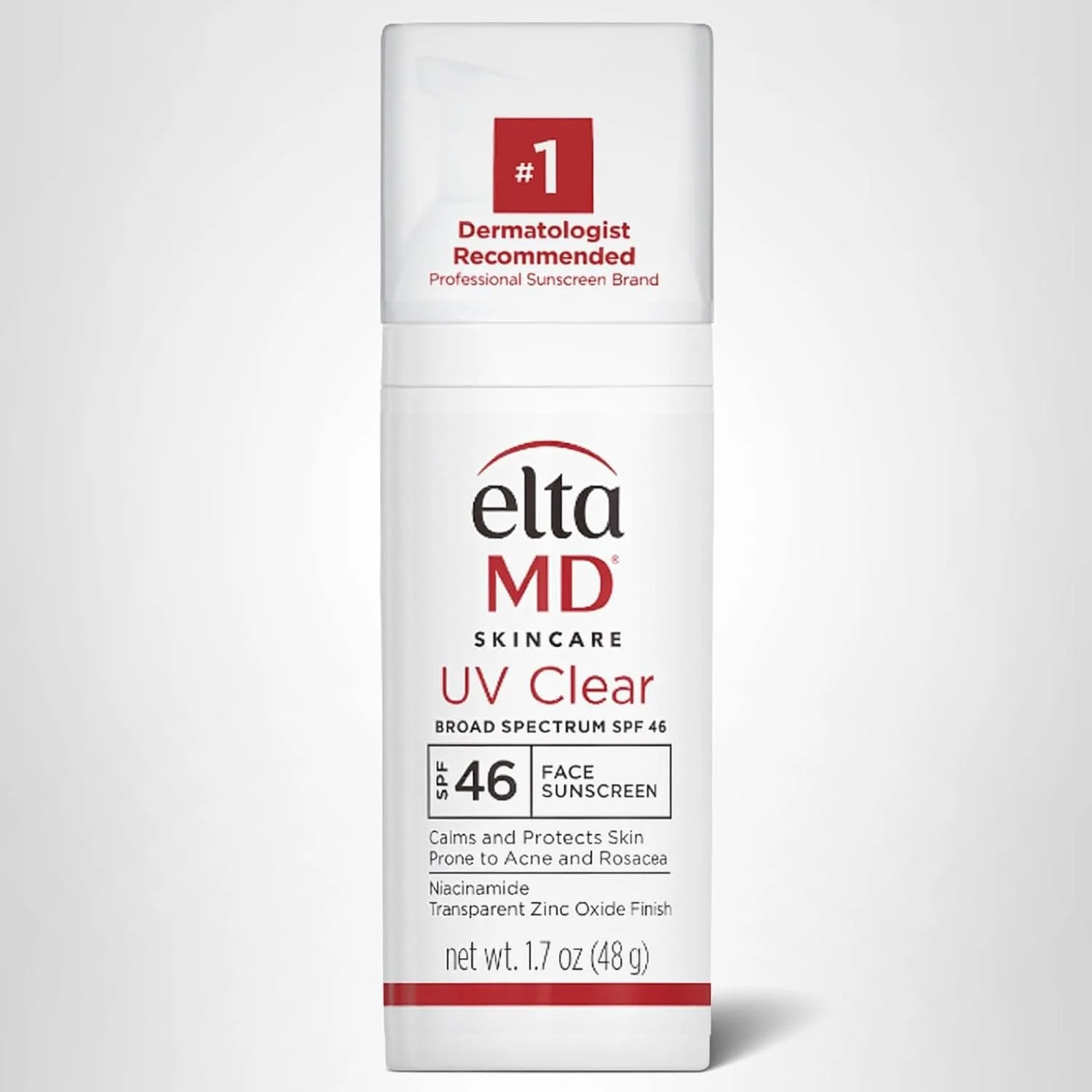
Why I love it. This is my holy grail and the one I used after skin cancer. It's silky, it disappears into the skin with no white cast, and the niacinamide does double duty, protecting my skin while it supports my moisture barrier.
The facts. Broad-spectrum SPF 46, a hybrid formula with 9% zinc oxide and 7.5% octinoxate. The niacinamide (vitamin B3) is why it's a longtime favorite for acne- and rosacea-prone skin.
2. Best Under Makeup
For dry skin: La Roche-Posay Anthelios Melt-In Milk SPF 60
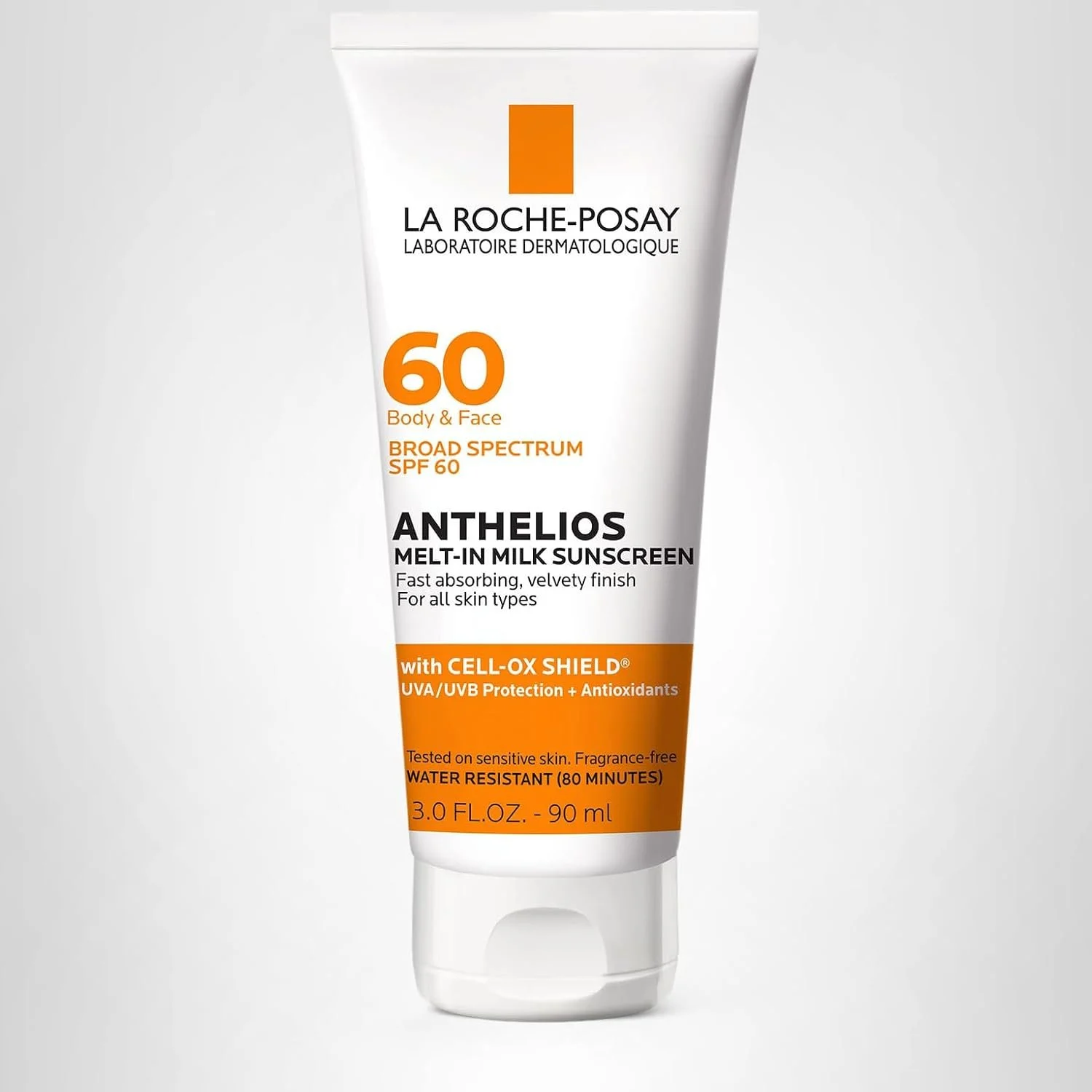
Why I love it. On dry-skin days, this one melts in like a moisturizer and gives my makeup the smoothest possible base. Nothing pills, nothing flakes. This is my current obsession that lives in my purse and makeup bag.
The facts. Broad-spectrum SPF 60, a chemical formula built around Cell-Ox Shield antioxidant protection. Water-resistant up to 80 minutes.
For oily skin: EltaMD UV Clear (again)
If your skin runs oily, UV Clear is the one. It's oil-free and mattes down beautifully under foundation, which is why it earns a second mention.
3. Best Value: CeraVe Hydrating Sheer Sunscreen SPF 30
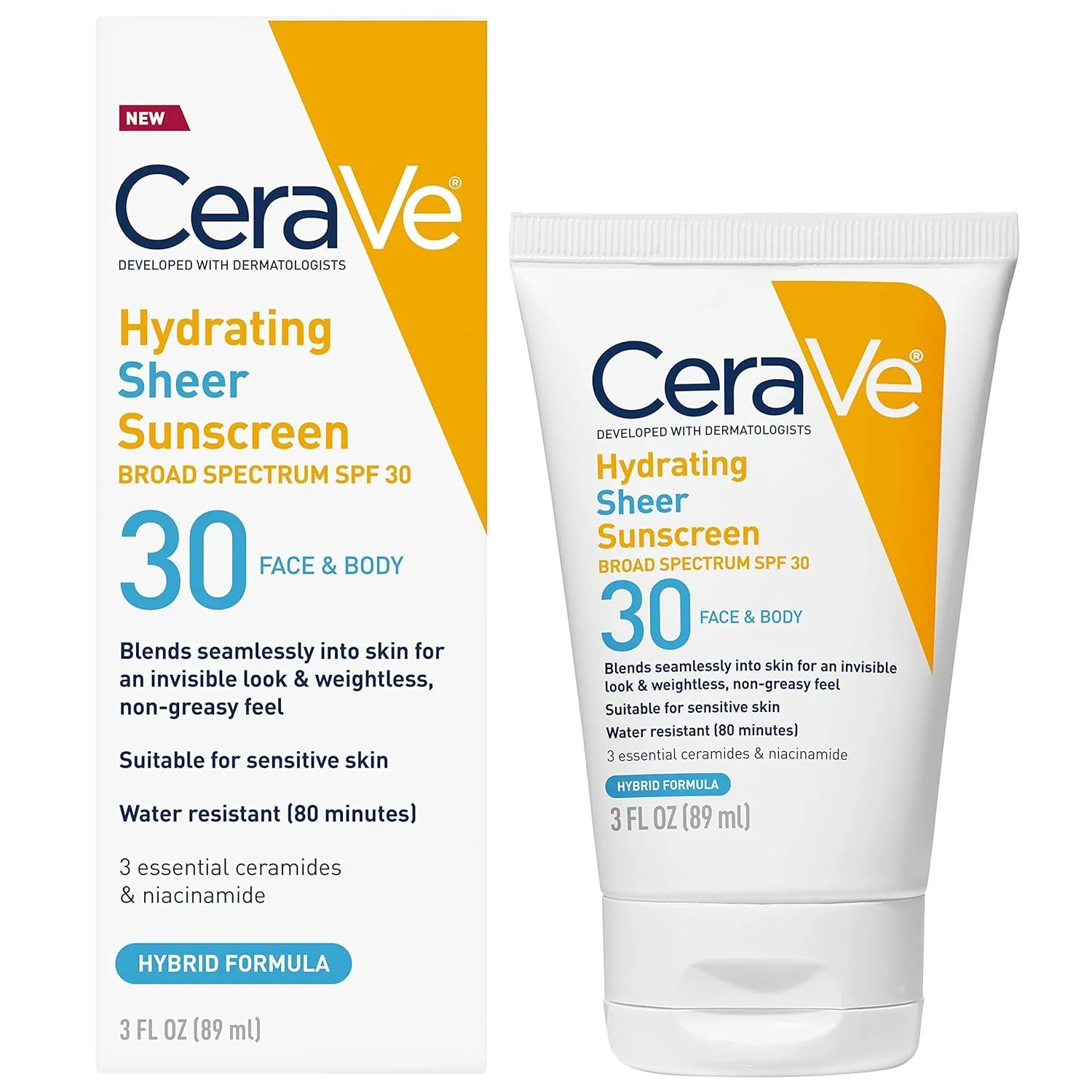
Why I love it. When I want solid protection without the price tag, this is the one I keep restocking. Hydrating, gentle, lightweight, and easy to find at any drugstore. Worth noting: I reach for the Hydrating Sheer specifically, not the mineral version, which I've never loved.
The facts. Broad-spectrum SPF 30, a hybrid formula that blends zinc oxide with chemical filters, plus ceramides and hyaluronic acid to support the skin barrier. It goes on with a slight white guide that absorbs within seconds.
4. Best Tinted Finish: La Roche-Posay Anthelios Tinted Mineral SPF 50
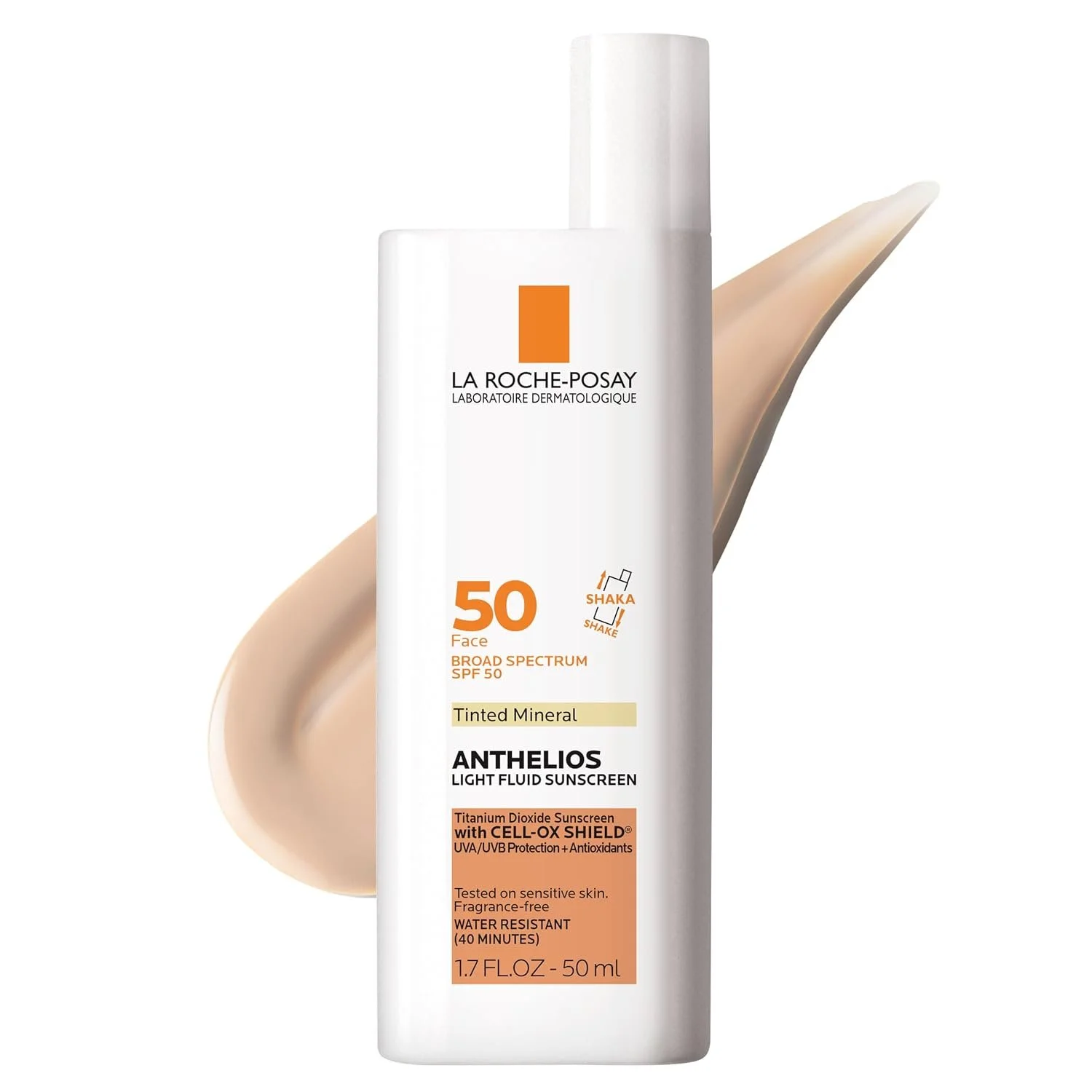
Why I love it. Tinted mineral is your secret weapon on no-makeup days. It evens everything out, and the tint erases the white cast mineral usually leaves. You can leave the house in just this.
The facts. Broad-spectrum SPF 50, a 100% mineral tinted fluid with titanium dioxide and Cell-Ox Shield antioxidant protection. Iron oxides add visible-light protection, a real plus if you deal with melasma or dark spots. Water-resistant 40 minutes, matte finish.
5. Best Sheer Glow: Supergoop Glowscreen SPF 40
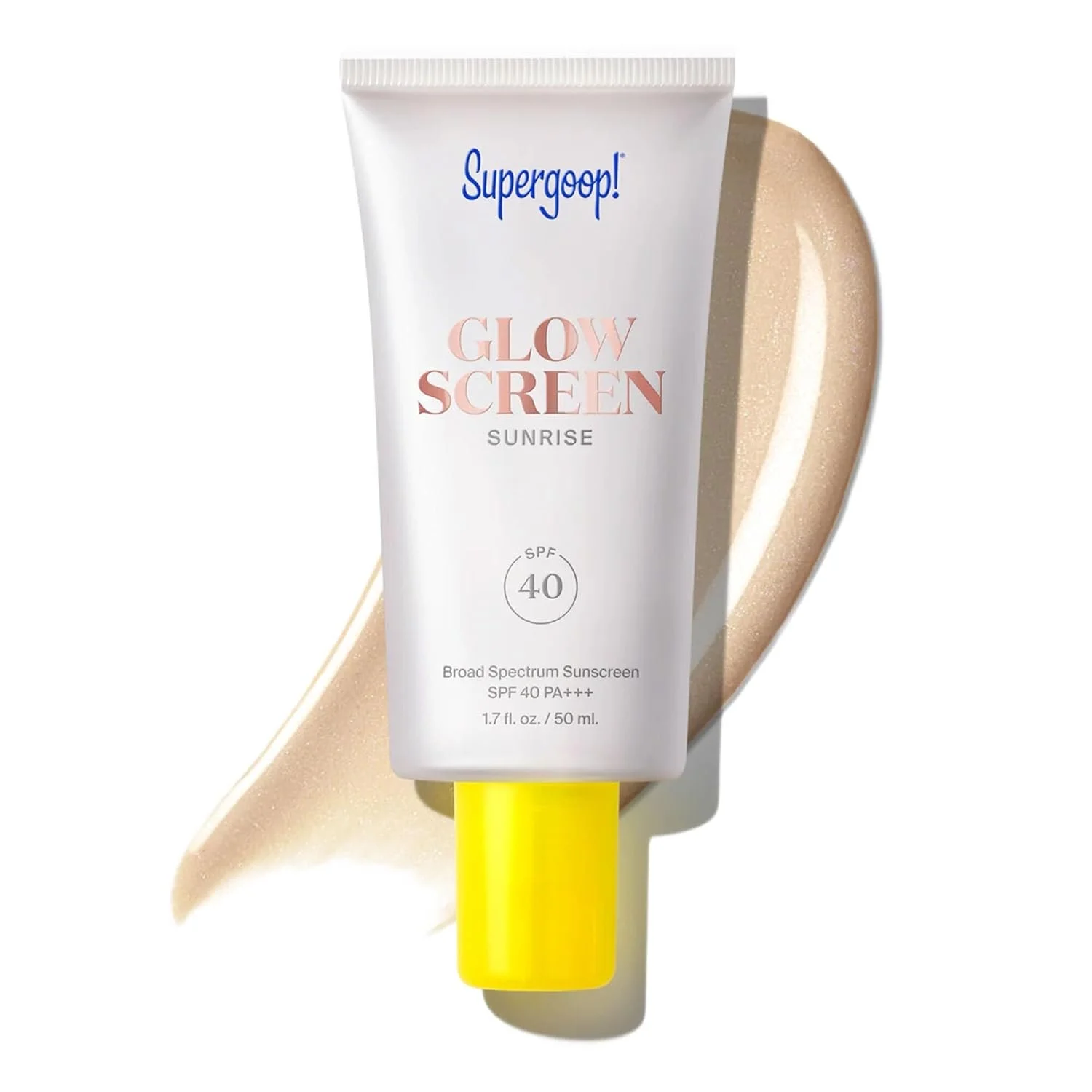
Why I love it. When I want my skin to look lit-from-within instead of flat, this is the one. It gives a gorgeous, not greasy, glow under or instead of makeup. It puts the fun in functional.
The facts. Broad-spectrum SPF 40, a chemical formula with added hyaluronic acid and niacinamide. The glow comes from light-reflecting pearls, cosmetic, not a protection claim, just a very pretty one.
Shop Supergoop Glowscreen · Luxe for Less: e.l.f. Whoa Glow SPF 30 gives a similar lit-from-within finish for a fraction of the price.
6. Best 100% Mineral Option: EltaMD UV Pure SPF 47
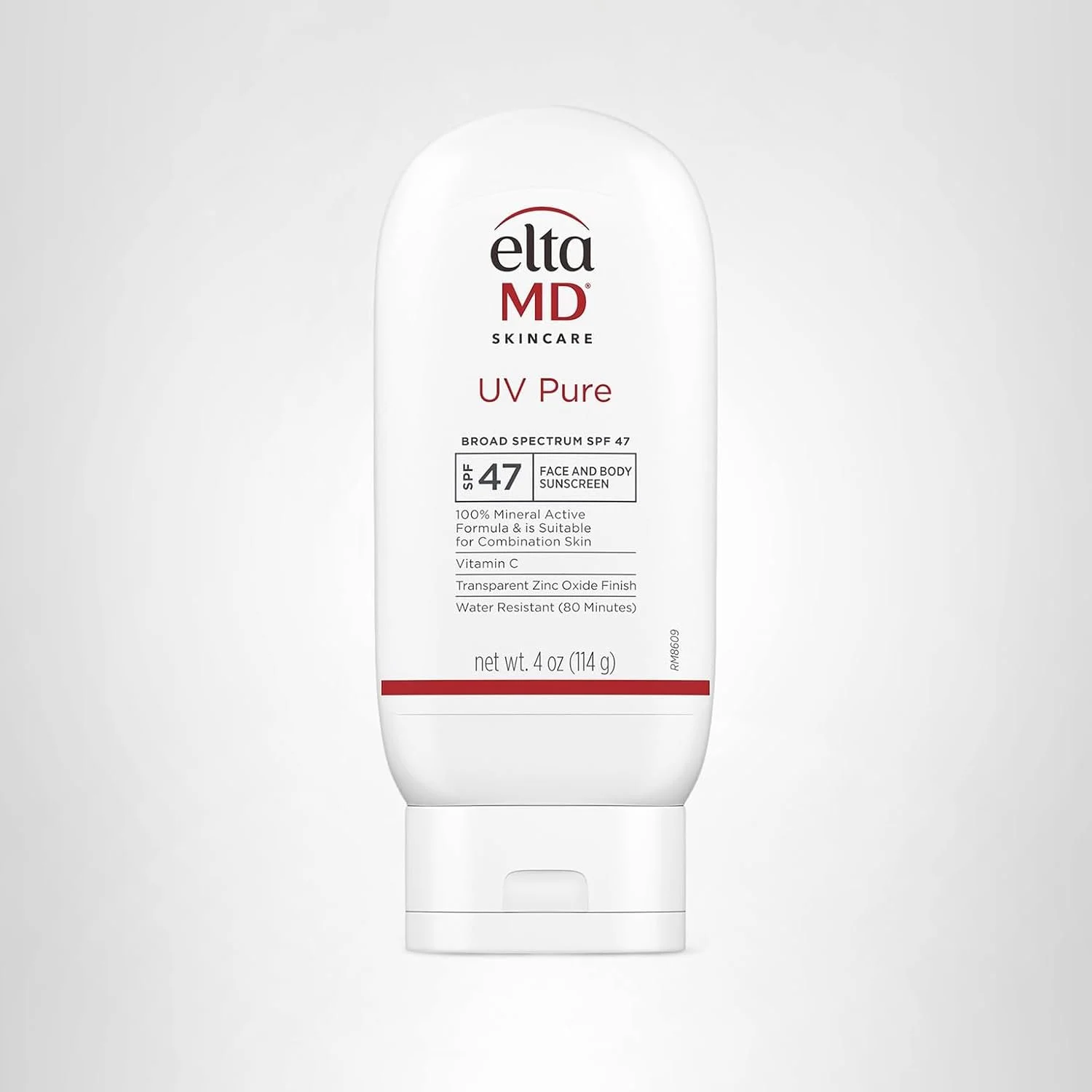
Why I love it. On days your skin is reactive or freshly…anything, go with pure mineral and nothing else. UV Pure is the one I trust for that.
The facts. Broad-spectrum SPF 47, a 100% mineral formula with 10% zinc oxide and 5.5% titanium dioxide. No chemical filters, water-resistant up to 80 minutes, and formulated for sensitive and post-procedure skin.
✦ ✦ ✦
FAQ
What is the best sunscreen to use after having skin cancer?
After skin cancer, look for a broad-spectrum sunscreen, SPF 30 or higher, ideally a mineral formula with zinc oxide or titanium dioxide. These sit on top of the skin and block UV rays, which tends to be gentler on healing, sensitive skin. The Skin Cancer Foundation keeps a vetted list and pure mineral formulas like EltaMD UV Pure SPF 47 are a common pick after a procedure.
How do I avoid the white cast from mineral sunscreen?
The white cast is a formula problem, not a mineral problem, and it's fixable. A few things that actually work:
Try a tinted formula. Iron oxides counteract the white hue and add visible-light protection.
Layer in thin sections. Dot it across your face and pat it in, letting each layer absorb a minute before adding more.
Prep with moisturizer first. Sunscreen drags and clings to dry skin. A hydrated base helps it blend.
Warm it in your hands. Rub it between your fingertips before pressing it in, so it melts in instead of sitting on top.
Or switch to chemical. Chemical filters are transparent on every skin tone, no cast at all.
Do dermatologists recommend SPF 30 or 50?
Both work. SPF 30 blocks about 97% of UVB rays, SPF 50 about 98%. The American Academy of Dermatology recommends a minimum of SPF 30. The bigger factor is how you use it: most people apply too little and reapply too rarely, so the best SPF is the one you'll wear generously and reapply every two hours.
Are mineral sunscreens better for your face?
It depends on your skin. Mineral sunscreens sit on top and reflect UV rays, which is often gentler for sensitive, rosacea-prone, or post-treatment skin. Chemical formulas absorb rays, tend to feel lighter, and layer better under makeup. Both protect against aging and skin cancer when they're broad-spectrum, SPF 30+, and actually worn daily.
Can you go in the sun after skin cancer?
Yes, but carefully. You are not suddenly relegated to a life as a hermit. You don't have to live indoors, you do have to respect the sun. That means daily broad-spectrum SPF 30+, reapplication, shade during peak hours (roughly 10am to 2pm), and covering up. Follow your dermatologist's specific guidance for any healing surgical sites before applying sunscreen directly on them.
Can I use body sunscreen on my face?
You can, but it's usually not ideal. Body formulas are typically thicker and more occlusive, so they're more likely to clog facial pores and trigger breakouts. Face sunscreens are formulated to be lighter and more cosmetically elegant. If your skin is reactive or acne-prone, a dedicated face SPF is worth it.
✦ ✦ ✦
Sun protection is one layer of the wall, not the whole wall. Pair it with shade, a hat, and UPF clothing, and see a dermatologist for a yearly skin check. If you ever notice a mole that's changing, get it looked at.
Mine was the size of a pencil eraser.
